
Answers to Common Roofing Questions
Common signs include missing or slipped tiles, leaks inside the property, damp patches, sagging areas, or visible wear to roofing materials. If you notice any of these, it’s best to have the roof inspected before the issue worsens.
n many cases, a leaking roof can be repaired if the damage is localised. However, if the roof is older or has widespread failure, a full or partial replacement may be more cost-effective in the long run. We always assess and provide honest advice based on the condition.
Very urgent. Even a small leak can quickly lead to internal damp, timber damage, and insulation issues. The sooner it is identified and repaired, the less likely it is to cause wider structural problems.
Yes, in most cases, individual tiles or slates can be replaced without needing a full roof repair. This is a common and effective way to fix localised damage and prevent further water ingress.
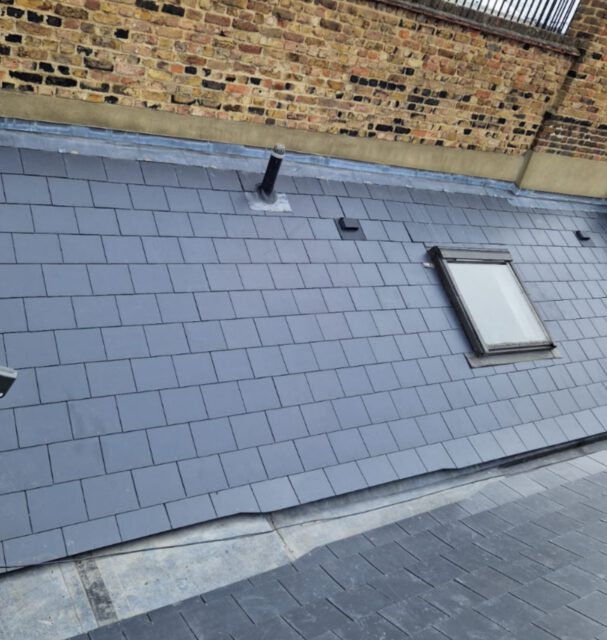
Yes, pitched roofs are ideal for skylights and Velux windows. Their structure allows for proper installation, good drainage, and effective sealing when fitted correctly by a professional roofer.
Flat roofs can be more prone to water pooling if not installed or maintained correctly, but modern systems are highly reliable. The key is proper installation and regular maintenance to ensure long-term performance.
There isn’t a single “best” system, as it depends on the property and budget. GRP and rubber systems are popular for durability and seamless finishes, while felt and asphalt are tried-and-tested traditional options. We recommend the most suitable system based on each project.
Yes, when properly installed with correct falls and drainage, flat roofs can handle heavy rainfall and snow. Issues usually arise from poor installation or lack of maintenance rather than the design itself.
Yes, like any roofing system, flat roofs benefit from regular inspections and maintenance. Clearing debris, checking joints, and addressing minor issues early helps extend their lifespan significantly.
Yes, older properties often require repointing as mortar naturally deteriorates over time. Repointing helps maintain structural integrity and prevents water ingress into brickwork.
It can be slightly disruptive due to dust and access requirements, especially if scaffolding is needed. However, it is a controlled process, and we always aim to keep disruption to a minimum.
Fascia boards are the horizontal boards fixed at the roof edge that support the guttering, while soffits are the boards underneath the roof overhang. Together, they protect the roof structure and help with ventilation.
Leadwork is used to waterproof vulnerable areas of a roof, such as chimneys, valleys, joints, and abutments. It is highly durable and flexible, making it ideal for sealing areas where different roof sections meet.
Contact Us
If you require any more information regarding any of the subjects mentioned here, or wish to use our roof repair or installation services, give Original Roofing & Construction a call on 0204 6199581 or 07979 648747 today. You’ll speak with a member of our friendly team, and we’ll help you in any way that we can.